Psy-function in Soviet Style: Substitutes for Psychoanalysis in the USSR
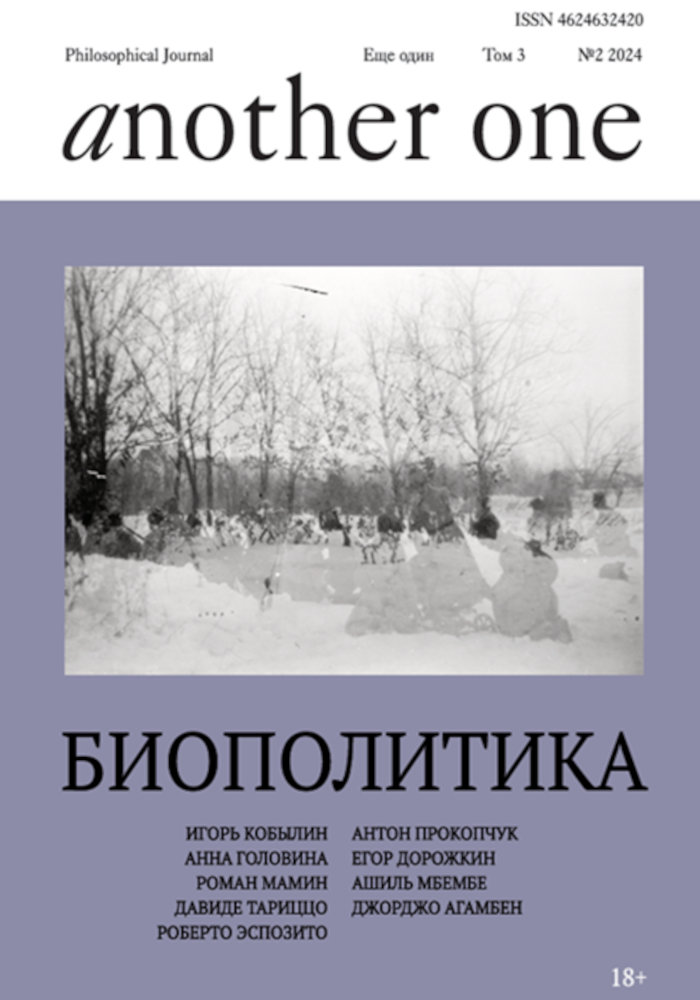
Abstract
The article considers the possibility of applying Michel Foucault's concept of «psy-function» to analyse late Soviet psychotherapeutic theories and practices. Within the framework of a critical approach, the author explores the emergence of alternatives to psychoanalysis against the background of its official prohibition in the USSR, turning to the concept of «psi-functions», which is traditionally used to describe the disciplinary role of psychological practices in Western societies and their relationship to the «discourse of truth». It is argued that other theories such as Uznadze's «theory of attitude» and Myasishchev's «pathogenetic psychotherapy» were developed in the USSR: these approaches, based on physiological and socio-psychological interpretations of the psyche, did not recognise psychoanalysis, but in some aspects offered similar mechanisms for explaining human subjectivity. This study is unique in its application of the concept of psy-function to the Soviet context. The author analyses three key Soviet theories — the school of attitudes, causal analysis and pathogenetic psychotherapy — showing how they expressed ideas about the unconscious and the desire to reduce the subject's problems to the family disposition. The article thus highlights the paradoxical role of psychoanalysis in the USSR: officially rejected, it nevertheless remained relevant through theories outwardly unrelated to Freudianism. The author proposes a reconsideration of the perception of the post-Soviet psychological space and argues that thanks to late Soviet psy-theories, society and experts were ready to accept the practices of Western psychological expertise, as predicted by British sociologist Nicholas Rose in the early 1990s. This article was prepared with the support of the SMARTS-UP scholarship programme.
Keywords
psychoanalysis, psy-function, Soviet history, Freudianism, critical studies of psychoanalysis
Author Biography
Roman Mamin
Мaster’s student, Faculty of Humanities and Social Sciences, Université Paris Cité; Paris, France.
References
- Lacan S. Un père, puzzle / S. Lacan. – Paris: Gallimard, 1994. – 112 p. – ISBN 2070780546. – 408 p. – ISBN 5-85962-021-7.
- Delez G., Gvattari F. Anti-Edip: Kapitalizm i shizofreniya [Capitalism and Schizophrenia] / G. Delez, F. Gvattari. – Ekaterinburg: U-Faktoriya, 2007. – 672 s. – ISBN: 978-5-9757-0192-3.
- Castel R. Le psychanalysme / R. Castel. – Paris: Francois Maspero, 1973. – 281 p.
- Foucaul M. Psihiatricheskaja vlast': kurs lekcij, prochitannyh v Kollezh de Frans v 1973–1974 uchebnomu godu [Psychiatric Power: The Course of Lectures delivered at the Collège de France in the 1973–1974 academic year] / M. Foucaul. – St. Petersburg: Nauka, 2007. – 450 p. – ISBN 978-5-02-026920-0. (In Russian)
- Rose N. Engineering the Human Soul: Analyzing Psychological Expertise / N. Rose // Science in Context. – 1992. – Vol. 5. – No 2. – P. 351–369.
- Kelly M. Foucault on Psychoanalysis: Missed Encounter or Gordian Knot? / M. Kelly // Foucault Studies. – 2020. – No 28. – P. 96–119.
- Foucault M. Slova i veshhi. Arheologija gumanitarnyh nauk [The Order of Things: An Archaeology of the Human Sciences] / M. Foucaul. – St. Petersburg: A-cad, 1994. – 408 p. – ISBN 5-85962-021-7. (In Russian)
- Foucault M. Volja k istine: Po tu storonu znanija, vlasti i seksual'nosti [The Will to Knowledge] / M. Foucaul. – Moscow: Kastal’, 1996. – 448 p. – ISBN 5-85374-006-7. (In Russian)
- Parker I. Discourse Analysis and Psychoanalysis / I. Parker // British Journal of Social Psychology. – 1997. – Vol. 36. – No 4. – P. 479–495.
- Lerner Y. Tele-terapiya bez psihologii, ili kak adaptiruyut Self na postsovetskom teleekrane [Tele-therapy without psychology, or how Self is adapted on the post-Soviet TV screen] / Y. Lerner // Laboratoirum. – 2011. – № 1. – P. 116–137. (In Russian)
- Ty hochesh' pogovorit' ob etom? Novaya psihologicheskaya kul'tura v postsovetskoj Belarusi i Ukraine [Do you want to talk about it? New Psychological Culture in Post-Soviet Belarus and Ukraine] / T. Shchitcova (sost.). – Vil'nyus: EGU, 2014. – 358 s. – ISBN 978-9955-773-78-8. (In Russian)
- Bassin F. V. Problema bessoznatel'nogo: o neosoznavaemyh formah vysshej nervnoj dejatel'nosti [The Problem of the Unconscious: On the Unrecognized Forms of Higher Nervous Activity] / F. Bassin. – Moscow: Izd-vo «Medicina», 1968. – 468 p. (In Russian)
- Uznadze D. N. Psihologija ustanovki [Psychology of Set] / D. N. Uznadze. – St. Petersburg: Piter, 2001. – 413 p. – ISBN 5-89357-121-5. (In Russian)
- Sherozija A. E. Psihika, soznanie, bessoznatel'noe: k obobshhennoj teorii psihologii. [Psychics, Consciousness, Unconsciousness: Towards a Generalized Theory of Psychology] / A. E. Sherozija. – Tbilisi: Mecniereba, 1979. – 172 p. (In Russian)
- Svjadoshh A. M. Psihoanaliz i kazual'naja terapija [Psychoanalysis and Causal Therapy] / A. M. Svjadoshh // Voprosy psihiatrii, psihoterapii, seksologii. – Karaganda: [b.i.], 1967. – 105 p. (In Russian)
- Svjadoshh A. M. Nevrozy i ih lechenie [Neuroses and Their Treatment] / A. M. Svjadoshh. – Moscow: Izdatel'stvo Medicina, 1971. – 456 p. (In Russian)
- Mjasishhev V. N. Lichnosti i nevrozy [Personality and Neuroses] / V. N. Mjasishhev. – Leningrad: Izdatel'stvo Leningradskogo universiteta, 1960. – 427 p. – ISBN 978-5-458-24994-2. (In Russian)
- Lichko A. E. Psihopatii i akcentuacii lichnosti [Psychopathies and Personality Accentuations] / A. E. Lichko. – Moscow: Izdatel'stvo Medicina, 1983. – 256 p. (In Russian)
- Alexandrov A. A. Intergativnaya psichoterapia [Integrative Psychotherapy] / A. A. Alexandrov. – St. Petersburg: Piter, 2009. – 352 p. – ISBN 978-5-388-00270-9. (In Russian)